How My Pahadi Dukan Increased Conversions Without More Ad Spend
A look at how intent-led personalisation reshaped the return-session funnel for My Pahadi Dukaan, and what a disciplined bundle test uncovered along the way.
The Snapshot
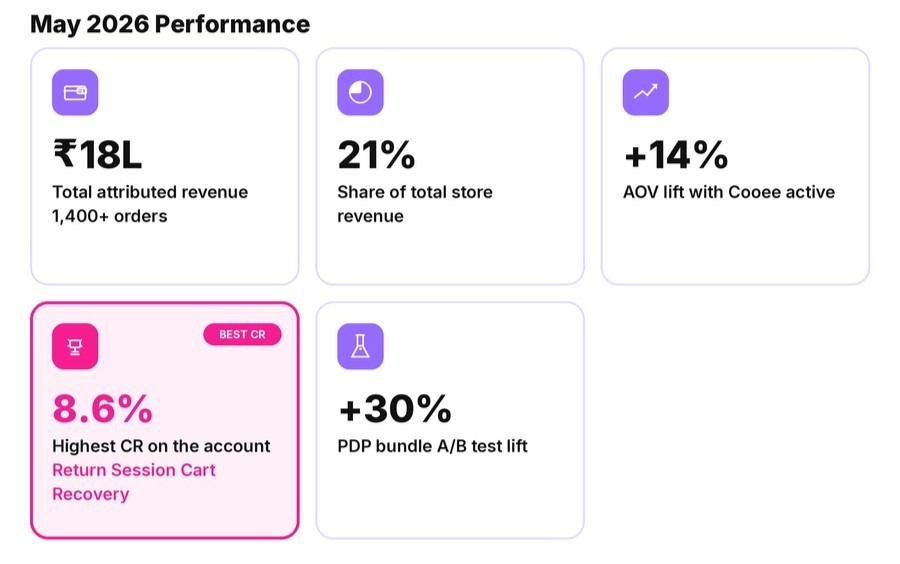
One month of live data. NO sale event running, no blanket discounting. Just intent-led personalisation working quietly across the funnel.
About the Brand
My Pahadi Dukaan is on a mission to bring the authentic flavours of the Himalayas to homes across India. Its carefully curated range of mountain-sourced, small-batch products celebrates regional traditions that are often overlooked by mainstream retail. While the brand had successfully built awareness and attracted engaged visitors, its next phase of growth depended on increasing conversions and repeat purchases without sacrificing margins through constant discounting.
The Challenge
My Pahadi Dukaan had already done the hard part: building a loyal audience and driving consistent traffic.
The next growth lever was conversion.
Rather than treating every session the same, the brand wanted a storefront that could recognise visitor intent in real time—helping first-time shoppers discover with confidence, returning visitors pick up where they left off, and merchandising decisions evolving through continuous experimentation.
The Approach: Reading the Session, Not Just the Visitor
Cooee approached the storefront as a series of decision points rather than a collection of pages.
Instead of asking "Which widget should appear here?", the question became "What does this visitor need next?"
The entire journey was designed around real-time intent.
First-time visitors were guided towards discovery. Social proof, best sellers, and contextual product recommendations helped build trust and reduce friction without pushing for an immediate purchase.
Returning visitors received a completely different experience. Having already shown interest, they were encouraged to explore further through shoppable videos, educational content, and personalised product discovery instead of restarting the journey from scratch.
When visitors displayed abandonment signals, Cooee shifted the experience again. Rather than relying on generic exit-intent popups, high-intent shoppers received dedicated recovery experiences with contextual messaging and countdown timers designed to create urgency without defaulting to blanket discounts.
Alongside these personalised journeys, Cooee continuously experimented with the storefront itself. Product bundle layouts on PDPs were A/B tested across thousands of sessions, allowing customer behaviour, not assumptions, to determine the highest-converting experience.
The result was a storefront that adapted in real time, serving the right intervention to the right visitor at the right moment.
Deep Dive
Why Returning Visitors Converted Best
Returning visitors already know your brand. They don't need another introduction; they need a reason to complete the purchase.
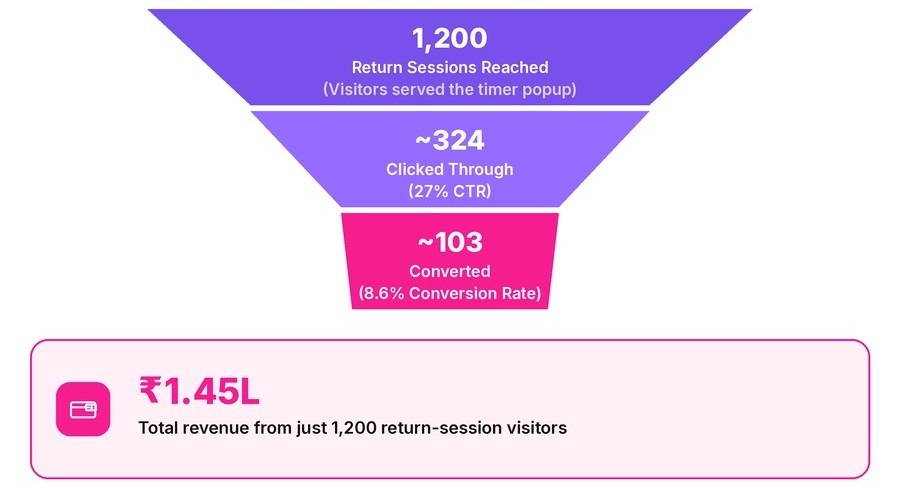
To capitalise on this high-intent audience, Cooee deployed a dedicated cart recovery journey exclusively for return sessions. Instead of showing a generic exit popup, shoppers who came back to the store were met with a personalised countdown experience designed to create urgency at the right moment.
This conversion performance wasn't simply impressive; it established the journey as the top-performing segment across the brand's entire ecosystem.
Backing this up from earlier in the funnel, shoppable video on Collection pages worked as a quiet re-engagement layer for returning sessions, giving them a reason to stay and explore before the moment they might otherwise have bounced.
The takeaway is clear: When intent is high, even a small audience can deliver outsized results.
A/B Test Spotlight: Finding the Right Bundle
Bundles are one of the simplest ways to increase average order value. By encouraging shoppers to buy complementary products together, often with a small incentive, they help brands grow basket size while creating a better customer experience.
But not every bundle performs the same.
The number of products, how the offer is presented, and the discount can all influence whether a shopper adds more to their cart or abandons the purchase altogether.
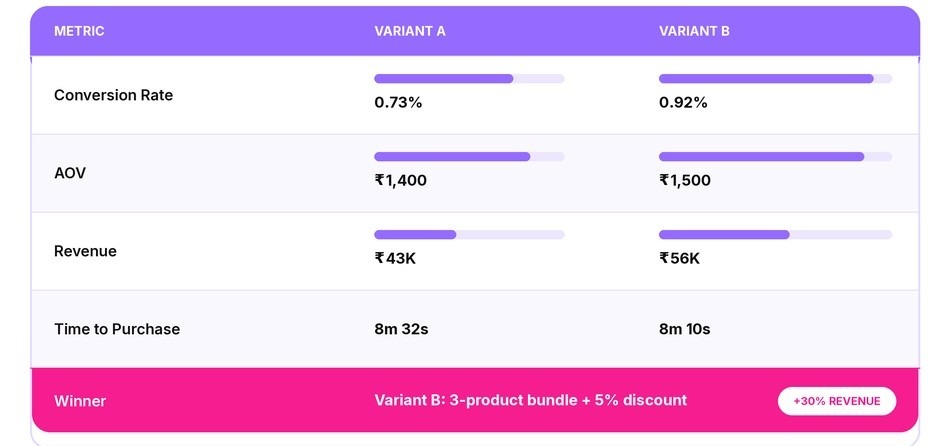
Instead of relying on assumptions, Cooee A/B tested two bundle configurations on the product page across 8,400 visitors to identify the combination that drove the best commercial outcome.
The winning configuration was rolled out across the store, replacing assumptions with a data-backed merchandising strategy that continues to drive results.
What Drove the Results
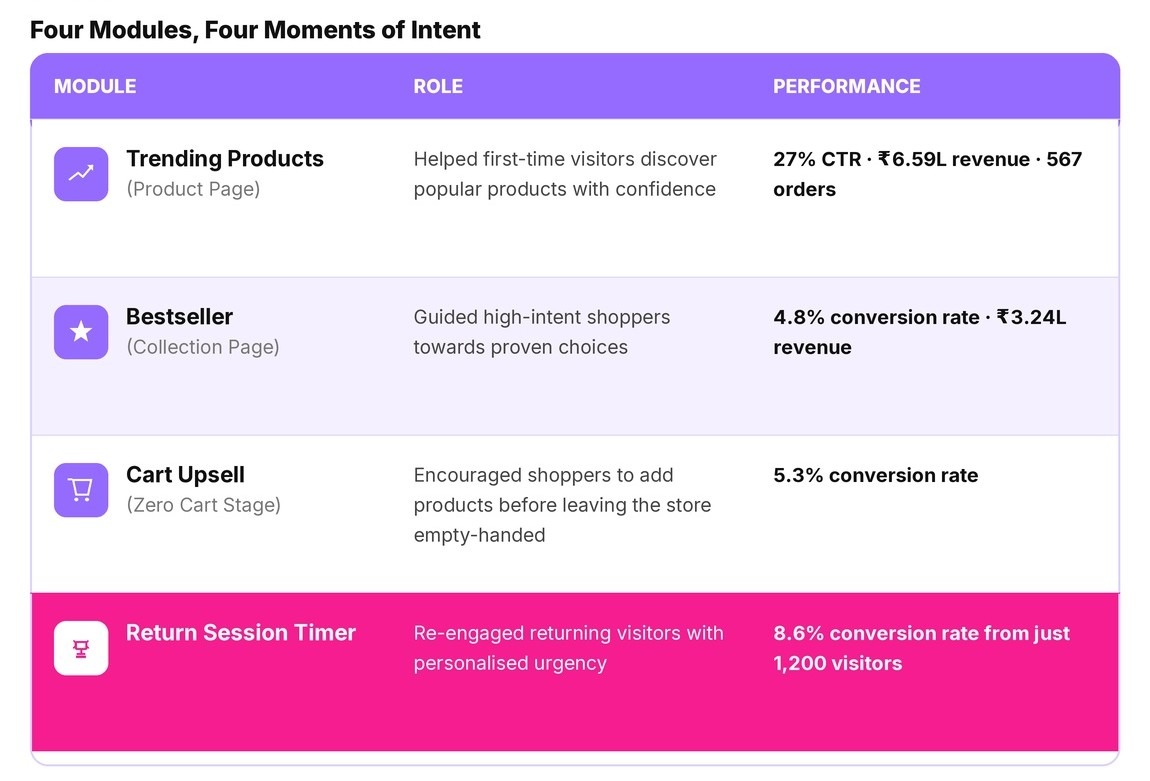
No single campaign drove the outcome. Each module was designed to solve a different customer need at a different stage of the buying journey.
Together, these campaigns created a storefront that adapted to visitor intent in real time, helping shoppers discover, evaluate, and purchase with the right intervention at the right moment.
The Impact
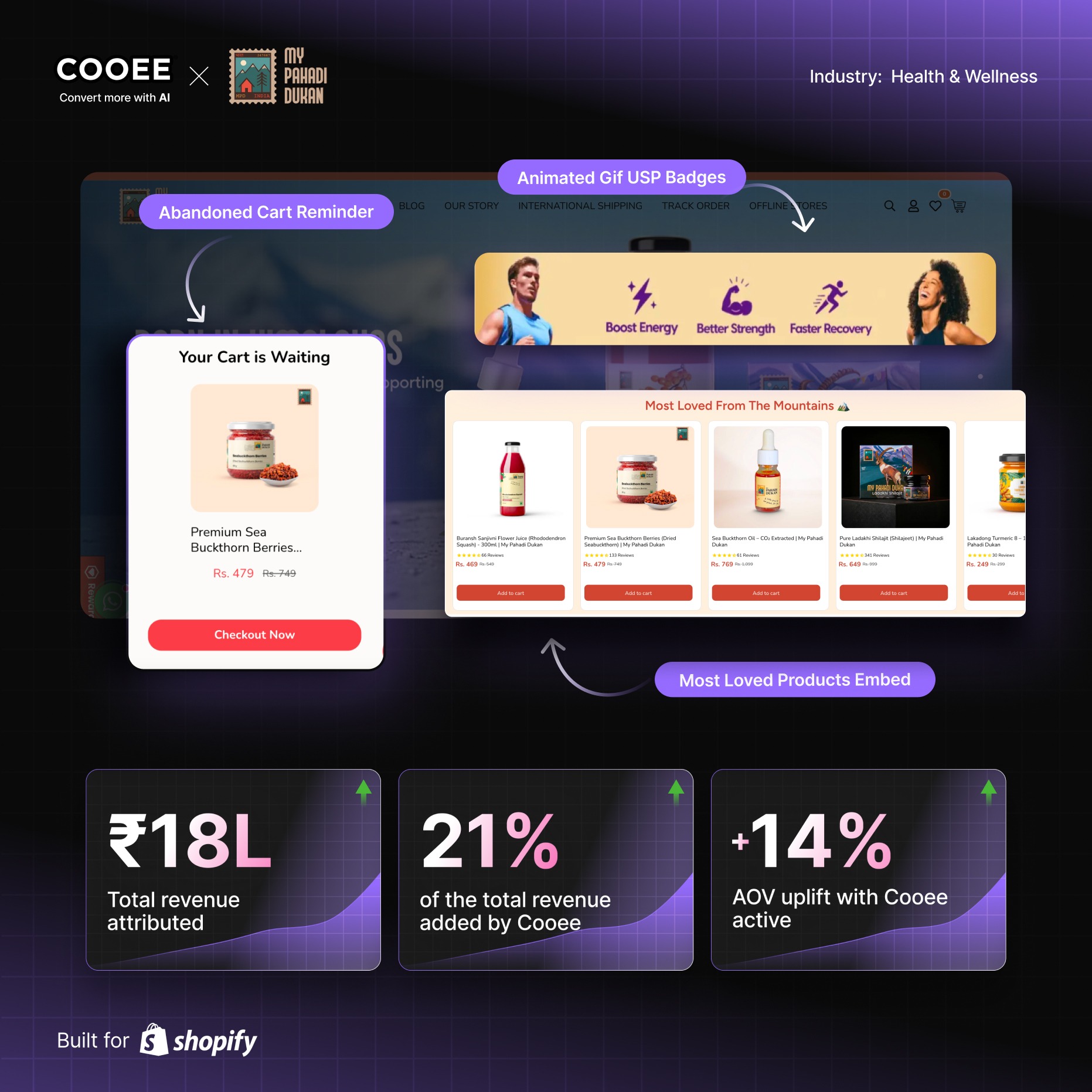
Over the course of May 2026, Cooee influenced 21% of My Pahadi Dukaan's total store revenue, generating ₹18L across 1,400+ orders while increasing average order value by 14%.
The biggest lesson wasn't that one campaign outperformed another, it was that intent-based personalisation works best when applied across the entire customer journey.
From helping new visitors discover products, to recovering high-intent returning shoppers, to continuously optimising merchandising through A/B testing, every interaction was designed to move customers one step closer to purchase.
For My Pahadi Dukaan, that meant turning existing traffic into more revenue without increasing acquisition spend or relying on deeper discounts.
Weekly newsletter
No spam. Just the latest releases and tips, interesting articles, and exclusive interviews in your inbox every week.
Thank you! Your submission has been received!
Oops! Something went wrong while submitting the form.
Ready to supercharge your e-commerce conversions?
Learn how Cooee can help you tap into the potential of visitor intent and drive more sales!